
Software · Automation · AI
for Modern Enterprises
Software · Automation · AI
for Modern Enterprises
Alpha Research is the reference architecture behind end-to-end research-report authoring. A crew of specialist agents — data collation, technical, fundamental, news, sentiment, consensus — work in parallel, debate the thesis across bull/bear and conservative/neutral/aggressive lenses, and pass through editorial and supervisory review before a publication-ready report comes out the other end. We piloted it on equity research; the same crew pattern adapts to credit, macro, sector, or any analyst-authored report.
A research report is not one act of writing. It is a sequence — collect data, evaluate it from multiple angles, debate the conclusion, manage risk, fact-check, edit, publish. Single-model approaches collapse these into one pass and inherit the model's blind spots.
Alpha Research models each act as its own agent, with its own tools, prompt, and review point. The technical analyst never argues valuation; the bear researcher cannot publish without the supervisory analyst signing off. The report that emerges is structurally similar to what an institutional desk produces — because the workflow is structurally similar.
A report moves through the crew in stages. Each stage has a clear owner, a clear input, and a clear hand-off.
Aggregates price data, fundamentals, news, and social sentiment from your chosen vendor mix. Caches per-vendor with TTLs tuned to how fast each signal moves.
Scores incoming data across completeness, freshness, and consistency dimensions. If the quality score falls below 60%, the run is blocked — no low-confidence report leaves the system.
Trend, momentum, volatility — moving averages, RSI, MACD, Bollinger bands, support and resistance. Produces the technical chart pack that ships with the report.
Valuation multiples, profitability, growth trajectory, balance-sheet health. Outputs a structured fundamental verdict with the figures that back each claim.
Sentiment and theme extraction from recent news coverage, with the market context the headline appears in.
Retail-investor sentiment from X and Reddit. Discussion volume, polarity, and the inflection points worth flagging.
Sell-side ratings, price targets, recommendation changes, and how consensus has moved over the last quarter.
Argues the upside — growth catalysts, positive trends, scenarios where the thesis works.
Argues the downside — risk factors, red flags, scenarios where the thesis breaks.
Three risk-profile lenses applied to the same evidence. Capital preservation, balanced risk/reward, asymmetric upside — each produces its own recommendation.
Reconciles the five perspectives into a single actionable recommendation — BUY, HOLD, or SELL — with conviction level and position-sizing guidance.
Quantifies the downside — stop-loss levels, position limits, portfolio impact. The risk section is not an afterthought; it is a separate agent's primary output.
Cross-checks facts against source data, verifies the numbers cited, and flags any logical inconsistency between sections before sign-off.
Applies house style — voice, structure, terminology. Polishes language without altering substance, so the published report reads as one document, not a stitching of agent outputs.
The final report is rendered to Markdown for the web, JSON for downstream systems, and a publication-ready PDF with LaTeX styling for distribution.
Agent logs, execution traces, checkpoint state, and chart images are preserved alongside the report — so any claim can be walked back to the agent and source that produced it.
Each agent has a name, a face, and a role. Sixteen on the core crew; nine more form the market around them. Hover to see them move.
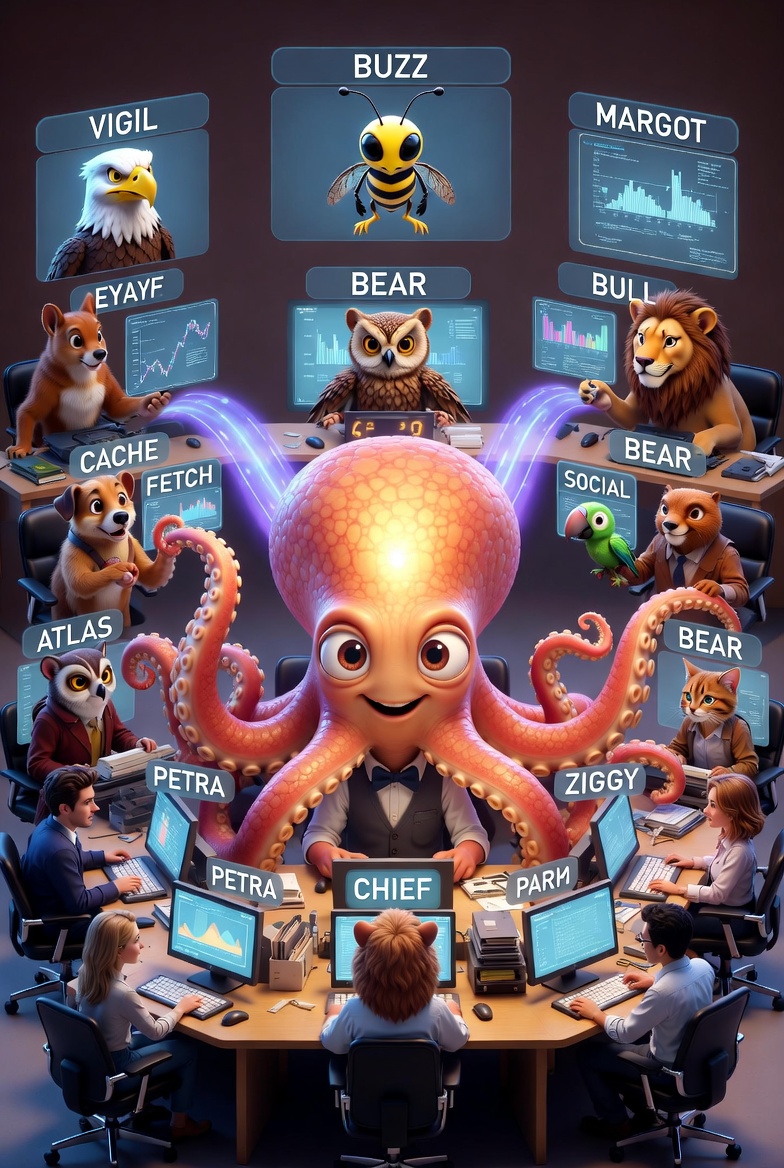
Master Analyst & Orchestrator

Data Fetcher

Data Organizer
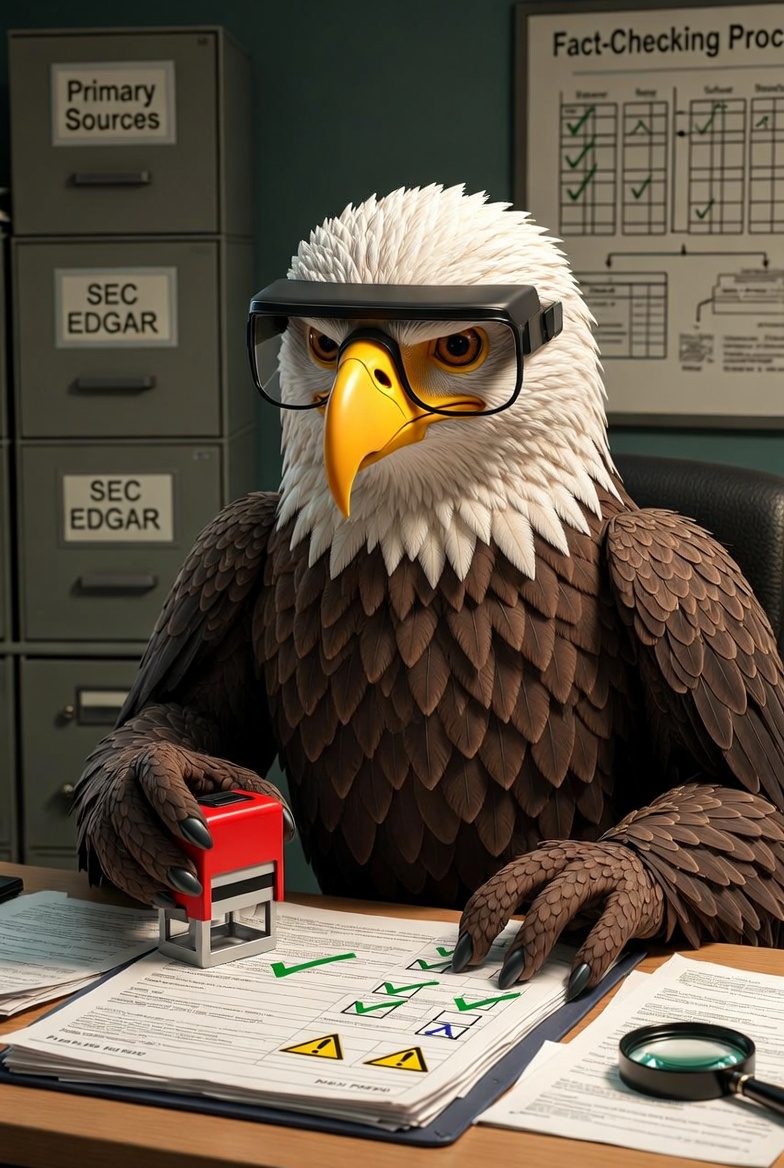
Validation Agent

Event Scout

Technical Analyst

Fundamental Analyst
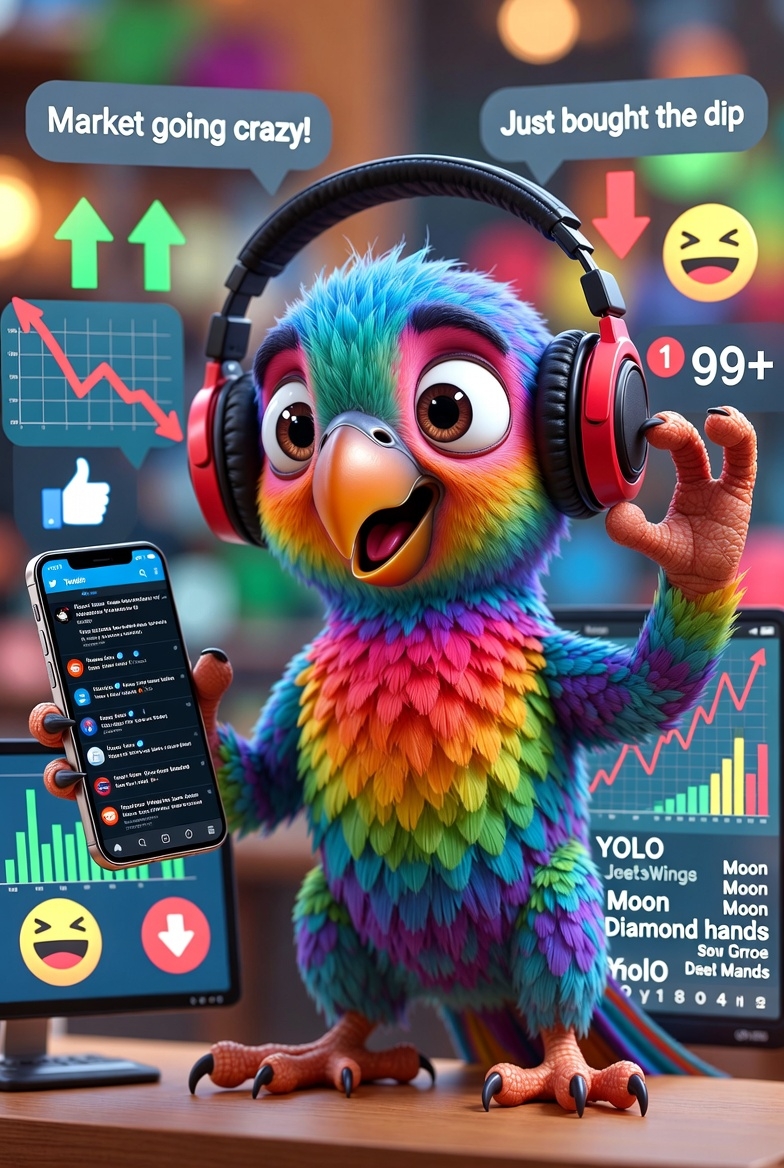
Sentiment Specialist
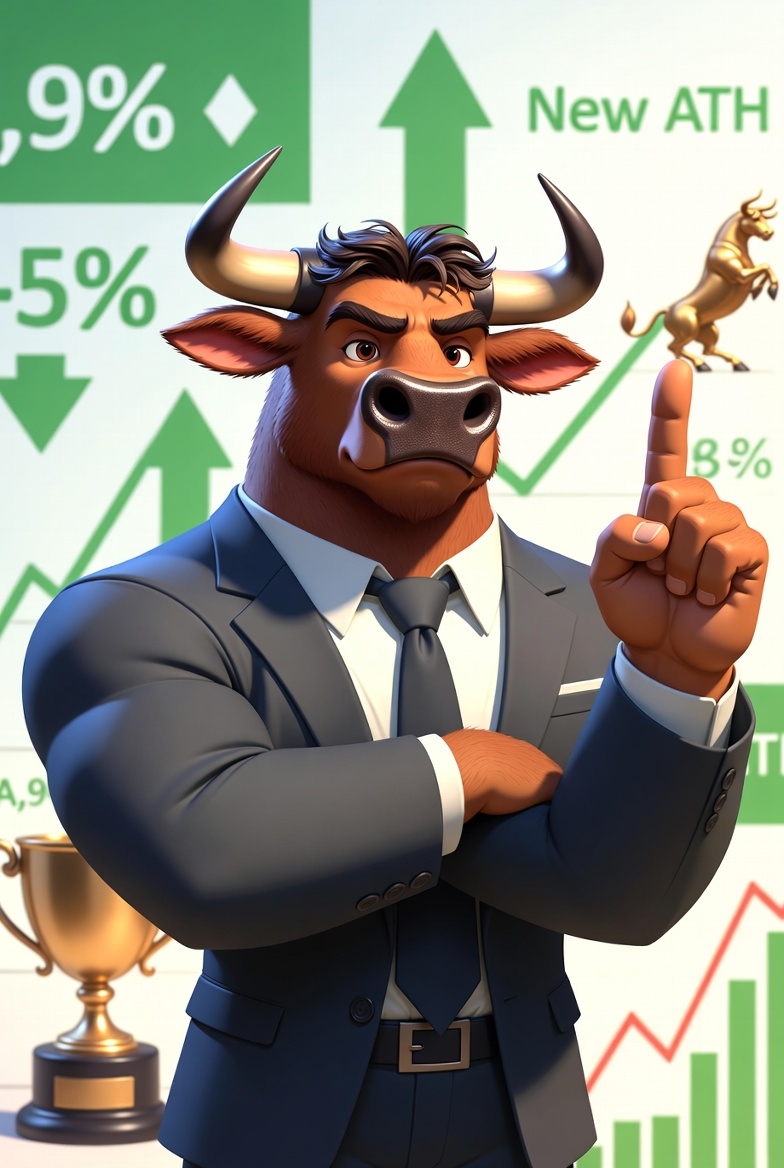
Bull Case Researcher
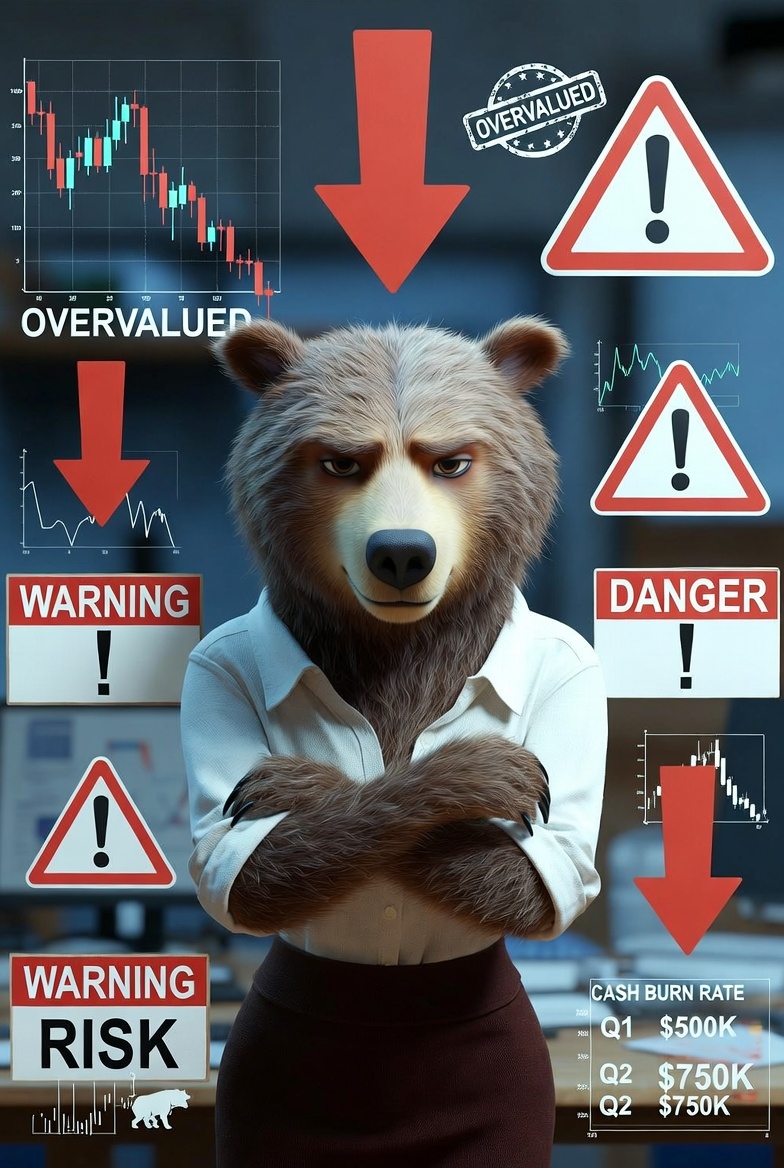
Bear Case Researcher
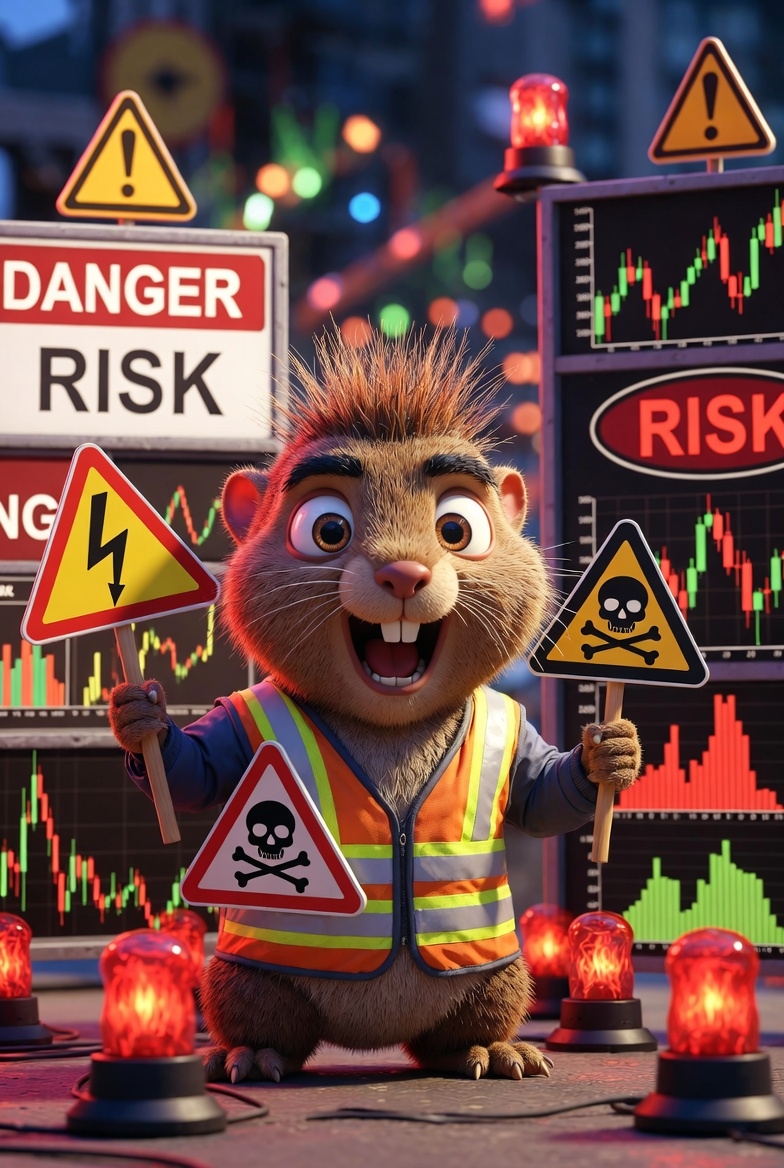
High-Risk Analyst
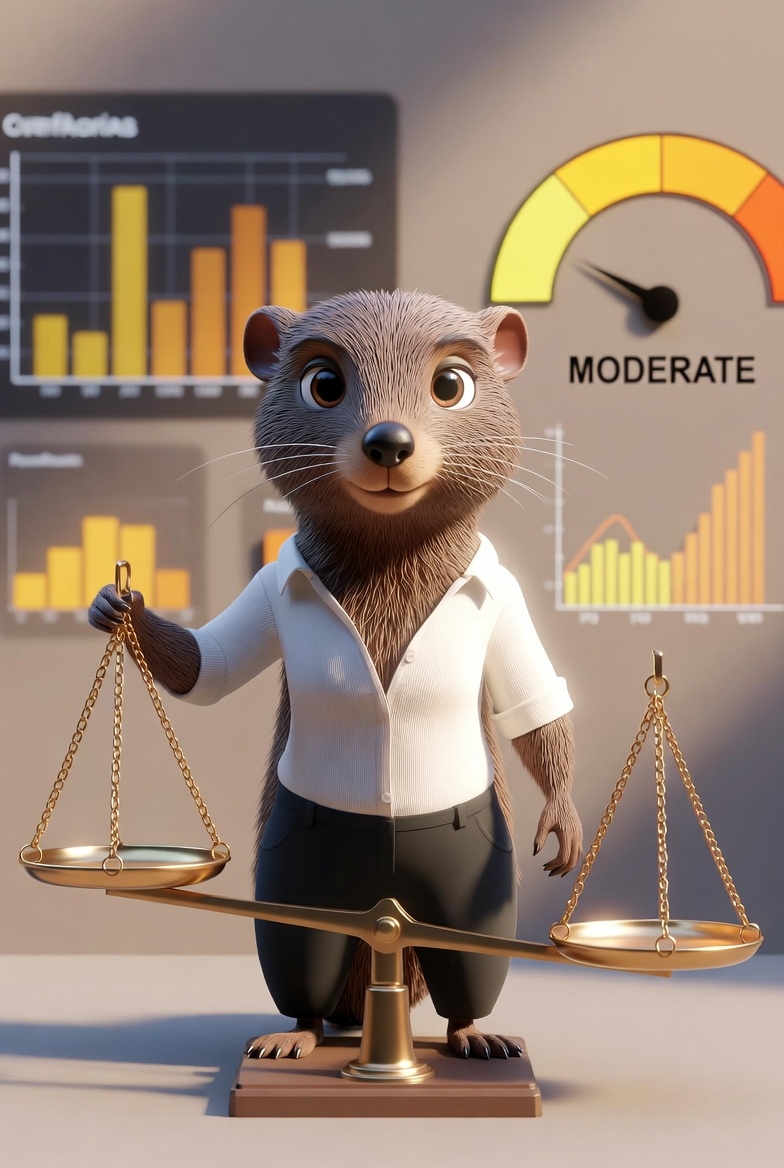
Medium-Risk Analyst
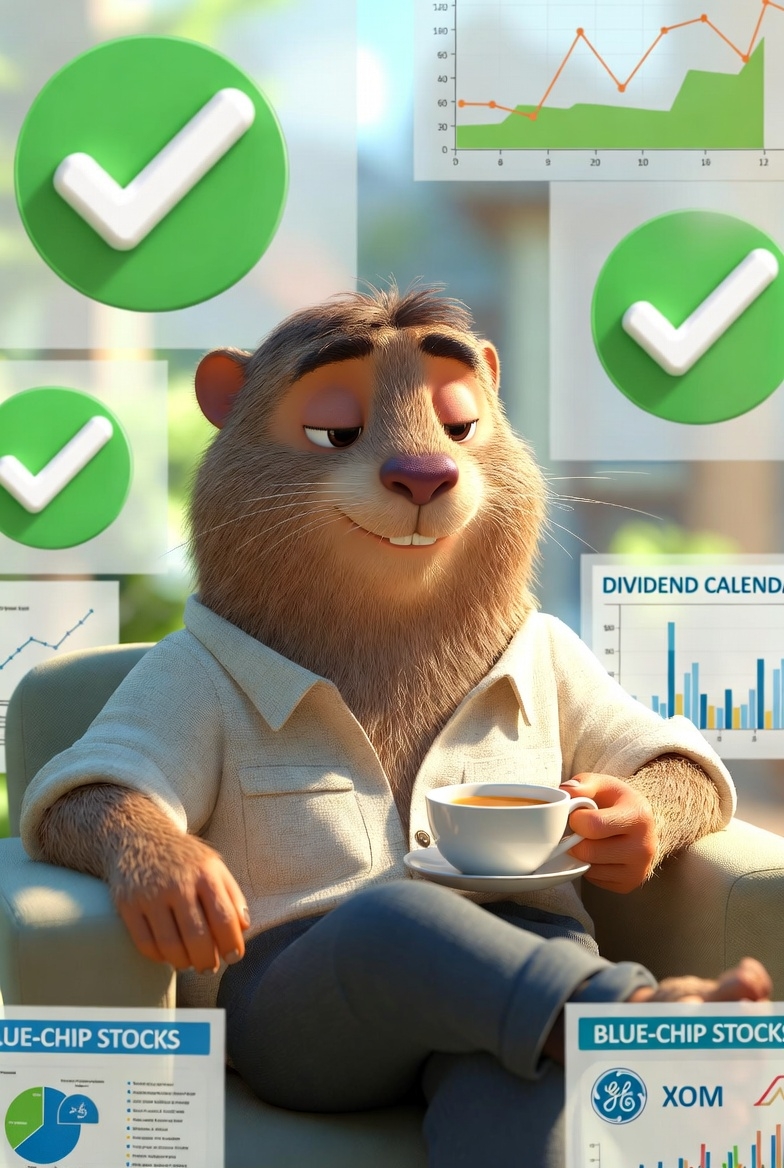
Low-Risk Analyst

Chief Investment Officer
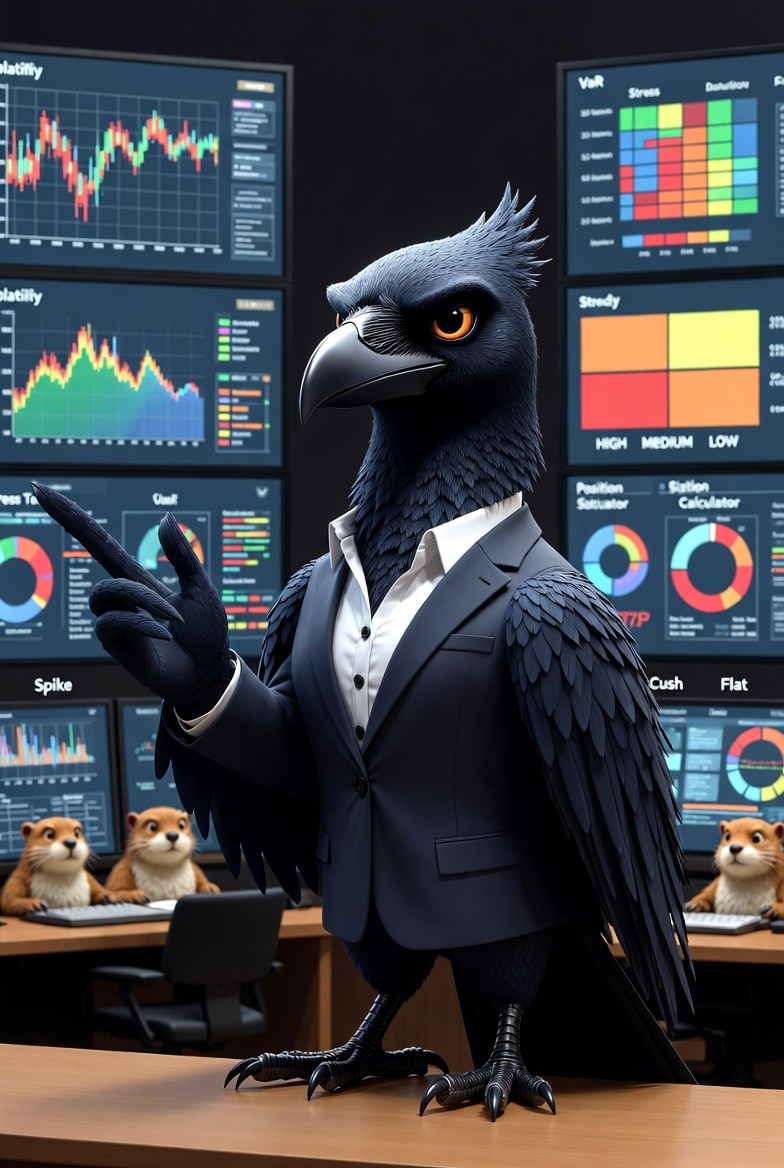
Chief Risk Officer

Editorial Head

Long-Term Investor

Speculative Trader

YOLO Trader
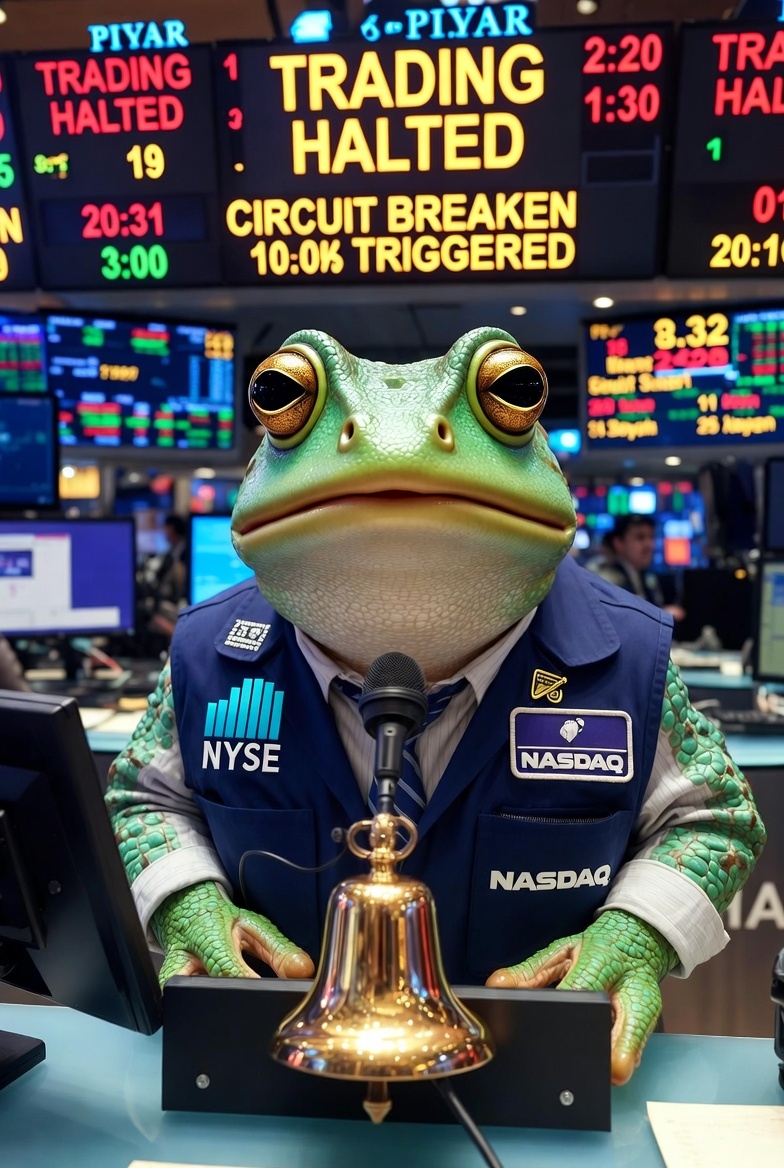
Exchange Official

Broker

Regulator

Shariah Compliance

Loan Shark
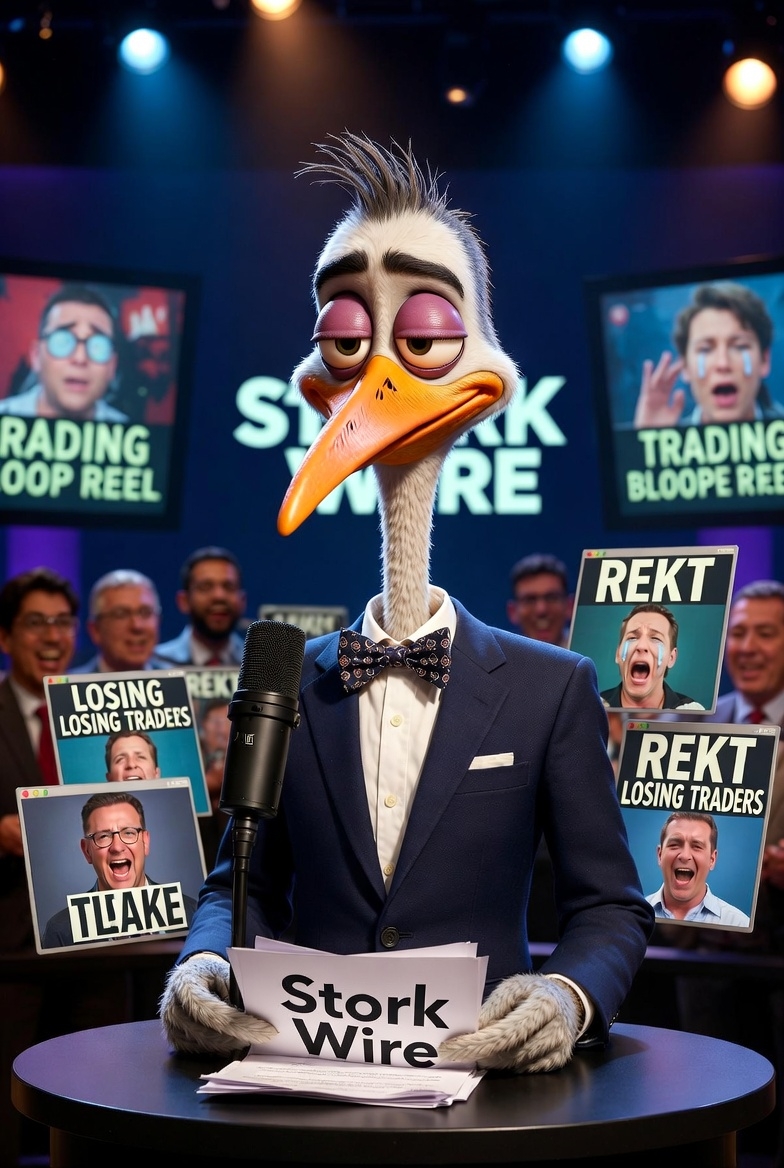
Host & Narrator
A ticker comes in on the left. A report comes out on the right. In between, the crew passes the work through quality gates, parallel analysis, structured debate, synthesis, and editorial review.
graph LR
    Input([Ticker]) --> Fetch[Fetch
Data Fetcher]
    Fetch --> Cache[Cache
Data Organizer]
    Buzz[Buzz
Event Scout] --> Cache
    Cache --> Vigil{Vigil
Quality ≥ 60%?}
    Vigil -->|No| Blocked([Run blocked])
    Vigil -->|Yes| Neuron((Neuron
Orchestrator))

    Neuron --> Atlas[Atlas
Technical]
    Neuron --> Petra[Petra
Fundamental]
    Neuron --> Ziggy[Ziggy
Sentiment]

    Atlas --> Bull[Bull
Bull Case]
    Atlas --> Bear[Bear
Bear Case]
    Petra --> Bull
    Petra --> Bear
    Ziggy --> Bull
    Ziggy --> Bear

    Bull --> Spike[Spike
High Risk]
    Bull --> Cush[Cush
Medium Risk]
    Bull --> Flat[Flat
Low Risk]
    Bear --> Spike
    Bear --> Cush
    Bear --> Flat

    Spike --> Chief[Chief
CIO]
    Cush --> Chief
    Flat --> Chief
    Chief --> Maven[Maven
Chief Risk Officer]
    Maven --> Margot[Margot
Editorial Head]
    Margot --> Report([Final report])

    classDef gate fill:#F5F1E8,stroke:#C84B22,stroke-width:2px;
    classDef orchestrator fill:#0B0D12,color:#F5F1E8,stroke:#0B0D12;
    classDef terminus fill:#0B0D12,color:#F5F1E8,stroke:#0B0D12;
    classDef blocked fill:#C84B22,color:#F5F1E8,stroke:#A83C19;
    class Vigil gate;
    class Neuron orchestrator;
    class Input,Report terminus;
    class Blocked blocked;
Each node maps to a portrait in the crew section above. Specialists run in parallel; debate runs sequentially. The dashed branch is the quality gate — a low-confidence run never reaches the analysts.
Zoom out from the Research House and the rest of the platform comes into view. Scout finds the tickers worth working on. The Research House writes the reports. The Trading Desk acts on them. Stork Wire wraps the day. Each house has its own crew; they hand off in a fixed order.
graph LR
    Open([6:00 AM
Market open]) --> Scout

    subgraph Scout["🔍 Scout"]
        direction TB
        Buzz[Buzz
Discovery & signals]
    end

    subgraph House["🏛️ Agentic Research House"]
        direction TB
        Neuron[Neuron
Orchestrator]
        Crew[Fetch · Cache · Vigil
Atlas · Petra · Ziggy
Bull · Bear
Spike · Cush · Flat
Chief · Maven · Margot]
        Neuron --> Crew
    end

    subgraph Desk["📈 Agentic Trading Desk"]
        direction TB
        Investors[Warren · Foxy · Blaze
Investor archetypes]
        Infra[Brok · Alex · Marshall
Nour · Don
Exchange infrastructure]
        Investors --> Infra
    end

    subgraph News["📰 Stork Wire"]
        direction TB
        Walter[Walter
Daily wrap & narration]
    end

    Scout -->|Top 3 tickers| House
    House -->|3 published reports| Desk
    Desk -->|Trades · fills · P&L| News
    News --> Close([5:30 PM
Daily wrap])

    classDef terminus fill:#0B0D12,color:#F5F1E8,stroke:#0B0D12;
    classDef anchor fill:#0B0D12,color:#F5F1E8,stroke:#0B0D12;
    class Open,Close terminus;
    class Neuron,Buzz,Walter anchor;
The Research House (graph above) sits inside the second box. Scout precedes it with discovery; the Trading Desk consumes its reports; Stork Wire closes the day with a wrap. Twenty-five personas across four houses — the equity-research pilot covered all four; an adaptation can take whichever houses fit your workflow.
The validation agent scores incoming data before any specialist runs. Missing fundamentals, stale prices, or thin news coverage produce a quality score; below the threshold, the entire run is aborted. The crew never spends compute on a report it cannot defend.
The five specialist analysts run in parallel against a thread pool — the time-to-first-draft is bounded by the slowest specialist, not the sum. The debate phase then runs sequentially, because each debater needs to read the others' arguments to push back meaningfully.
Every phase writes a checkpoint. A run that fails at phase 5 resumes at phase 5 — the data fetch and specialist analysis from earlier phases are loaded from cache. Long, expensive crews stay tractable in production.
Most multi-agent debate setups pit one bull against one bear. Alpha Research crosses the bull/bear axis with a conservative/neutral/aggressive risk-profile axis — five distinct lenses on the same evidence. The investment manager that reconciles them has a richer surface to work with, and the final recommendation comes with the risk profile it was built for.
24/7 coverage across markets and sectors that human analyst capacity cannot reach. The crew drafts; analysts add the house view and the field colour that distinguishes them.
Per-client, risk-profile-aware briefings generated at scale — the conservative analyst's output for retired clients, the aggressive analyst's for growth-tilted ones.
Pre-market briefings, screen-and-write workflows, and what-if scenarios across a watchlist — generated overnight, ready before the open.
White-labelled report generation as a value-added layer on top of an existing data subscription — vendors ship intelligence, not just feeds.
The crew architecture is the asset. The equity-research pilot proves it on a hard, multi-source surface. The same pattern adapts to credit research, macro briefings, sector deep-dives, or any analyst-authored report that combines structured data, documents, and a defensible point of view.
A short conversation to understand your asset class, your report templates, and where multi-agent authoring would actually save analyst time. We start with discovery, not a sales pitch.